
Pressure injuries, often referred to as bedsores, require immediate and specialized attention to prevent progression, as untreated cases can lead to severe complications and prolonged suffering. Our dedicated mobile treatment team provides advanced care for homebound patients and those in assisted living facilities in Kootenai County, focusing on essential pressure relief and specialized wound healing protocols tailored to each individual’s needs. By utilizing the latest techniques and technology, we ensure that patients receive optimal care in the comfort of their own homes, promoting faster recovery and enhancing overall quality of life. We understand the importance of education and support for both patients and caregivers, which is why we also offer guidance on best practices to minimize the risk of future pressure injuries and improve skin health.
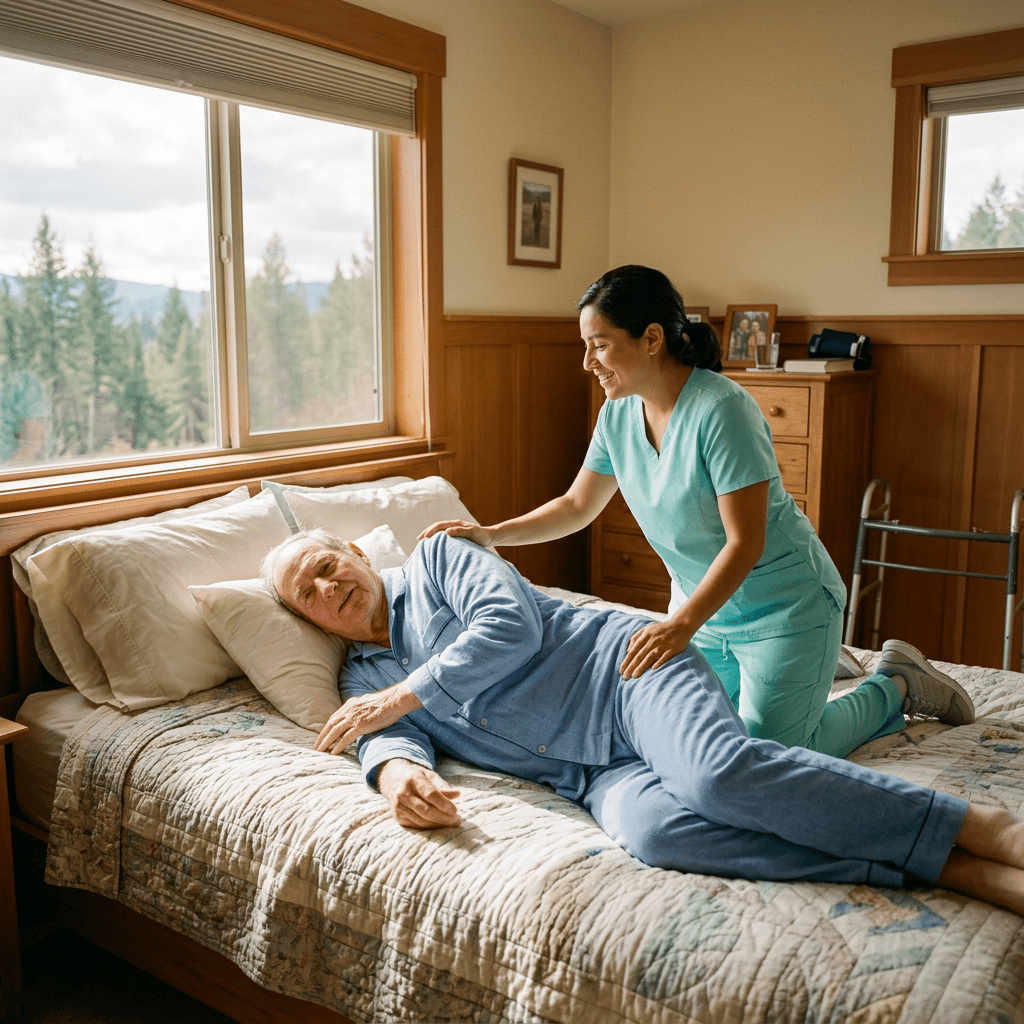
General Repositioning Guidelines
| Time Interval | Activity | Position | Notes |
|---|---|---|---|
| Every 1-2 Hours | Reposition patient in bed | Alternate: Supine (back) 30° Lateral Tilt (sides) | Never use a 90° side-lying position. Use pillows/wedges to support a gentle 30° tilt to keep pressure off the hip bones. |
| Continuous (Whenever lying down) | Float/Elevate the heels | Supine or semi-Fowler’s | Heels must remain suspended completely clear of the mattress. Place a pillow under the calves (avoiding the back of the knee) or use a rigid heel-suspension boot. |
| Every 15–60 Minutes | Shift weight / Reposition in chair | Sitting position | Instruct patients to shift their own weight every 15 mins if able. Assist dependent patients hourly. Limit continuous sitting to a maximum of 1–2 hours. |
| At Every Turn & Daily | Check skin condition | Any position | Briefly check skin with every turn. Look for persistent redness, discoloration, or warmth on bony areas. Conduct a formal, full-body skin assessment daily. |
| Daily | Cleanse and moisturize skin | Any position | Keep skin clean, dry, and protected from moisture (sweat/incontinence). Apply barrier creams if needed, but never massage red or bony areas, as this causes deep tissue damage. |
Ensure to document any changes in the patient’s condition and adjust the repositioning plan as necessary.
When elevating the head of the bed (HOB) to sit a patient up in bed, keep the angle at or below 30 degrees whenever medically possible. Exceeding 30 degrees causes the patient’s body to slide down, creating severe “shear force” that stretches and tears the delicate blood vessels in the sacrum and tailbone.